








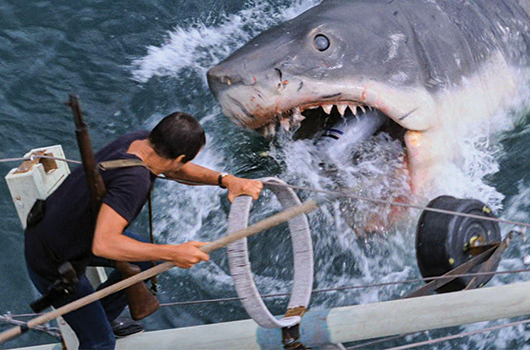
Jaws (Universal 1975)
Steven Spielberg’s Jaws was released by Universal on the 20th of June, 1975 – and the movies were never quite the same again. It did for swimming what Psycho had done for showers, it turned an ordinary summer trip to the beach into the stuff of nightmares, invented the modern blockbuster, and announced a 27-year-old director as the most exciting talent in Hollywood.
A troubled shoot off Martha’s Vineyard
Adapted from Peter Benchley’s bestselling novel by Benchley himself and Carl Gottlieb, Jaws was a famously difficult production. Shooting on the open water off Martha’s Vineyard rather than in a studio tank, Spielberg and his team battled the weather, the tides and a budget and schedule that ballooned alarmingly. At the centre of the chaos was the film’s monster: a temperamental mechanical shark that gave the crew no end of trouble.
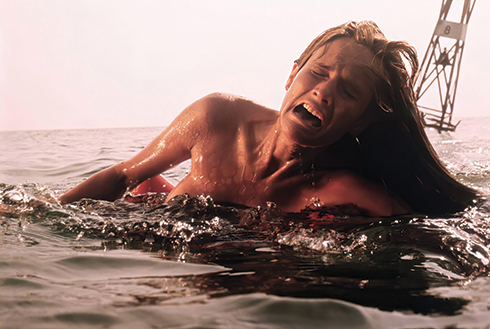
Chrissie Watkins (Susan Backlinie) is the first victim of the shark in Jaws (Universal 1975)
The monster you barely see
The shark – nicknamed Bruce after Spielberg’s lawyer – broke down so repeatedly in the corrosive salt water that the director was forced to shoot around it, revealing his monster only sparingly and suggesting its presence through point-of-view shots and John Williams’ now-immortal two-note theme. What began as a technical disaster became the film’s masterstroke: by keeping the shark hidden for so long, Jaws taught a generation that what you don’t see is far more terrifying than what you do.
Get the Ultimate Guide in the shop →
Three men in a boat
For all its scares, Jaws endures because of its people. The second half belongs to three superb performances aboard the Orca: Roy Scheider’s decent, water-fearing Chief Brody, Richard Dreyfuss’ brash young oceanographer Matt Hooper, and – towering over both – Robert Shaw as the haunted shark-hunter Quint, whose USS Indianapolis monologue remains one of the finest single scenes in American cinema. The interplay between the three men gives the film a human heart that no amount of mechanical-shark spectacle could provide.
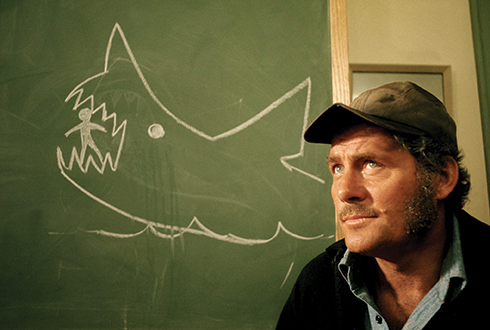
Robert Shaw as the shark hunter Quint, making his skills available to the community in Jaws (Universal 1975).
The first summer blockbuster
Jaws was released to enormous queues and became, for a time, the highest-grossing film ever made – the picture that taught Hollywood the power of a wide summer release backed by a saturation advertising campaign. It won three Academy Awards, made a superstar of Spielberg, and cast a long shadow over everything that followed. More than fifty years on, its blend of craft, restraint and sheer storytelling nerve has never been bettered, and it remains essential viewing for anyone who loves the movies.
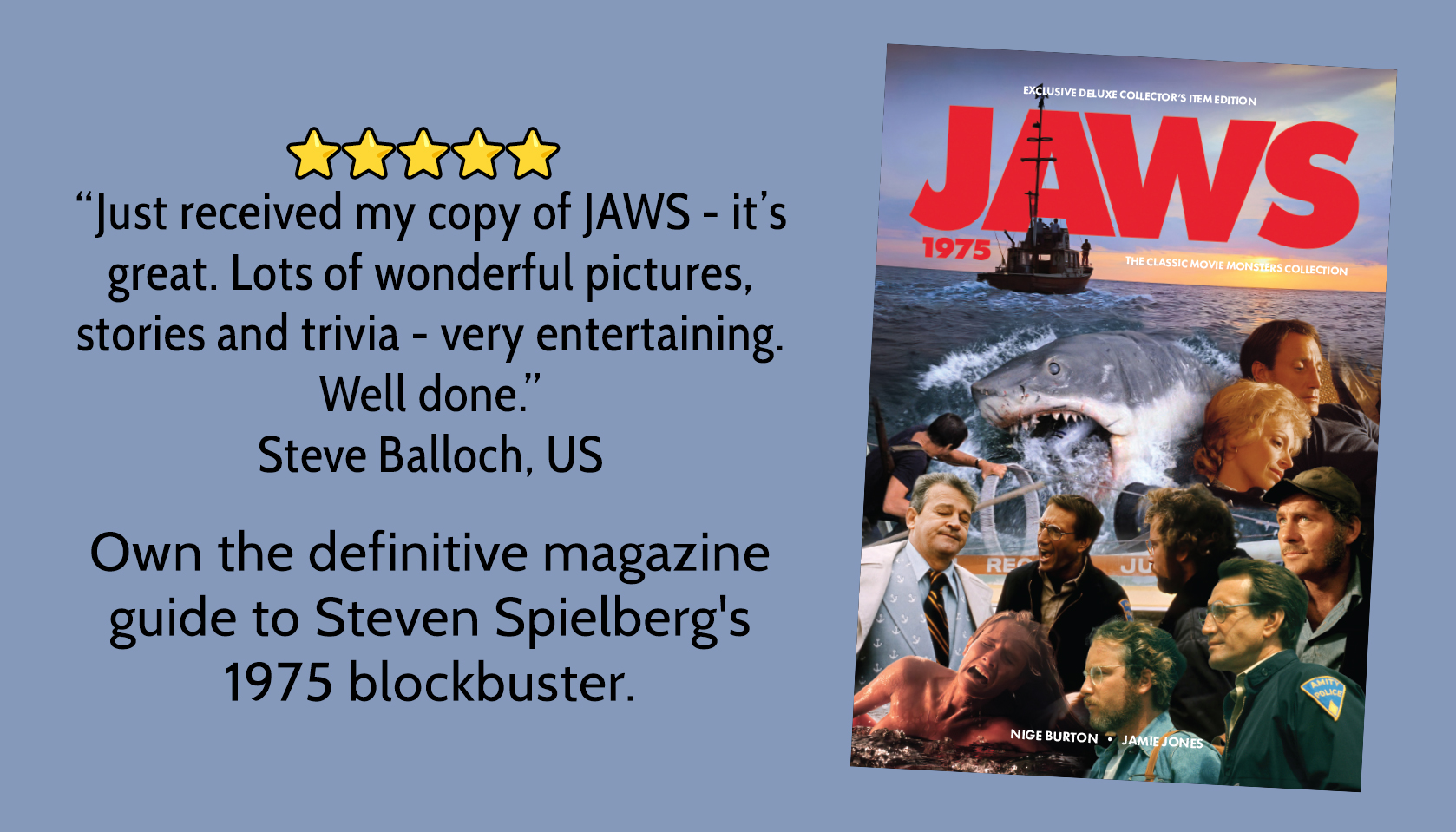
Our Jaws 1975 Ultimate Guide Magazine tells the full story of the film across 36 luxurious full-colour pages – production history, cast and crew biographies, and a wealth of beautifully restored stills. Get your copy in the shop →
Leave a comment